Dental
 Orthodontics


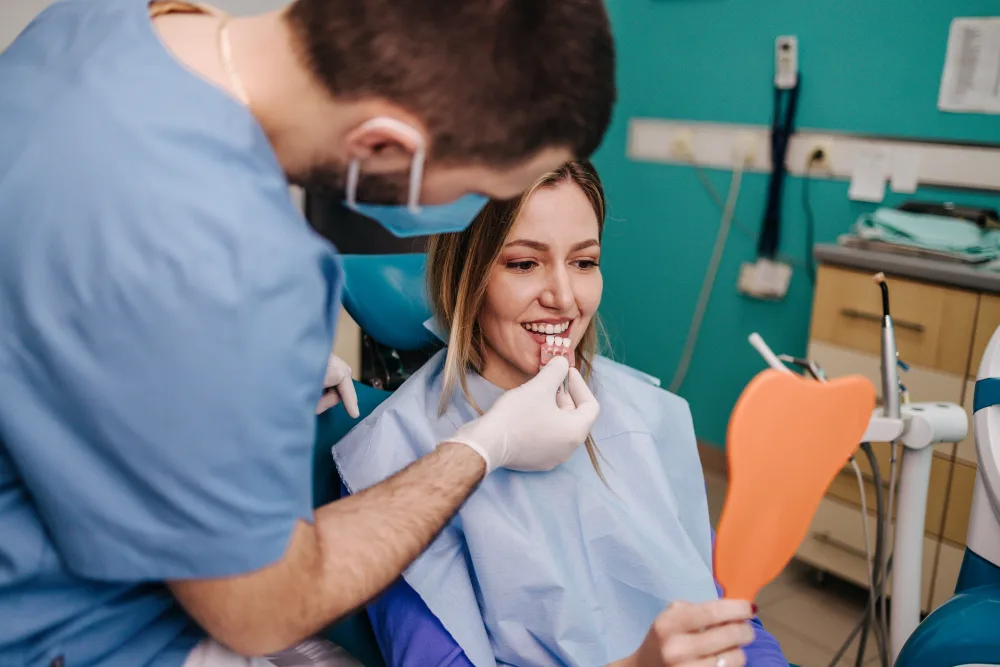
Losing a tooth can affect how you eat, speak, and feel about your smile. A well-planned dental implant can restore comfort and confidence with a solution that looks and feels natural.
At Braces & Faces Orthodontics, Specialist Implantologist Mark Lester provides assessment, digital planning, implant surgery, and final restoration under one roof. This guide explains what to expect, who implants suit, how treatment fits with orthodontics, hygiene support, typical timelines, and finance options.
If you are comparing choices, you will also find clear alternatives and practical next steps to book an implant consultation and speak with our reception team about current offers.
What Is a Dental Implant?
A dental implant is a small titanium post placed in the jaw to replace a missing tooth root. After healing, it supports a custom-made crown, or can anchor a bridge or stabilise loose dentures. Titanium typically bonds with the bone, creating a stable foundation for everyday chewing and a natural-looking smile.
Your Journey with Specialist Implantologist Mark Lester
Comprehensive assessment: Mark examines your mouth, gums, bite, and the space for the missing tooth. He reviews your medical history and any risk factors such as smoking or diabetes control.
Digital planning: iTero scanning and imaging help map bone volume and ideal implant position. This improves precision and helps protect adjacent teeth and nerves.
Surgery: The implant is placed under local anaesthetic with careful sterile technique. Most patients report pressure rather than pain during placement.
Healing: Over several weeks, bone integrates with the implant. A small healing cap or a temporary solution may be used to maintain appearance and function.
Final restoration: Once stable, a precision-made crown is fitted to match your neighbouring teeth. Where needed, bridges or denture attachments are planned.
Our hygienist Gregory Wilshaw supports you with tailored cleaning advice before and after surgery to protect gums and the implant site.
Who Is Suitable for Dental Implants?
Many adults with one or more missing teeth are suitable. Key requirements include healthy gums, good daily cleaning, and enough bone to hold an implant. If bone is thin, grafting or site preparation may be recommended. Conditions such as active gum disease, heavy smoking, uncontrolled diabetes, or bruxism can affect healing and long-term success, so these are managed first.
If a tooth is failing, timing can be coordinated so the area heals well before the final crown. Where neighbouring teeth are tipped or spaced, we consider whether alignment will improve the implant position and bite.
Do I Need Orthodontics Before an Implant?
Not always. There are two safe ways to plan:
Align first: If teeth have drifted into the gap or the bite is off, short, focused orthodontics can open the ideal space and improve the final result. Options include Invisalign® aligners or fixed braces.
Plan around the gap: If the space and bite are already ideal, we plan the implant position digitally and proceed without moving other teeth.
Our team includes Specialist Orthodontists who work closely with Mark. If you are exploring clear aligners, learn more about Invisalign® treatment in Wolverhampton on our dedicated page, where you can also see how remote Dental Monitoring supports progress.
How Long Does an Implant Take from Start to Finish?
Timelines vary with healing and complexity, but a typical single-tooth path is:
Assessment and digital planning: 1 to 3 weeks, depending on scans and any preparatory hygiene.
Implant placement: A single appointment.
Healing and integration: Around 8 to 12 weeks for many healthy, non-grafted sites. Grafted areas may take longer.
Restoration: Impressions or scans, then crown fit over 2 to 4 weeks.
Overall, many straightforward cases complete in approximately 3 to 5 months. Your exact timing is confirmed after assessment.
Hygiene Support and Maintenance
Implants rely on healthy gums. Before surgery, we focus on plaque control and gentle technique around the planned site. After placement, you will receive a simple routine using a soft brush, interdental brushes, and, where appropriate, mouthwash. Regular checks help prevent peri-implant inflammation. If you wear a nightguard or grind, we will discuss protection for your new crown.
Dental Implant Costs and Finance Options
Implant pricing depends on the number of implants, need for grafting, and the type of restoration. Social posts from our practice reference starting prices between £2,500 and £3,500 for single-tooth implant treatment, but exact fees are confirmed after clinical assessment.
We offer flexible monthly payment plans and finance options. Our reception team can outline current terms and any consultation offers. You can also see a wider breakdown of treatment pricing on our costs page.
To discuss your situation, call 01902 341991 or email info@bracesfaces.co.uk.
Alternatives to Dental Implants
Bridge: Uses neighbouring teeth to support a replacement tooth. Useful when those teeth already need crowns, but involves preparing them.
Denture: Removable and budget-friendly, and can replace one or several teeth. Some patients later upgrade to an implant or implant-retained denture for stability.
Do nothing: Leaving a gap can lead to drifting or bite changes over time. We will explain the risks so you can make an informed choice.
Sequencing with Orthodontics in Wolverhampton
If you have crowding, tilting into the gap, or bite issues, aligning first can improve both function and appearance before implant placement. Our Specialist Orthodontists can advise on Invisalign® or discreet fixed options.
To explore clear aligners, see our guide to Invisalign® in Wolverhampton, including how remote check-ins work. If fixed appliances suit you better, you can also review our overview of modern braces in Wolverhampton to compare approaches and plan your timeline.
Frequently Asked Questions
Am I suitable for dental implants?
Most healthy adults are potential candidates if gums are stable and bone volume is adequate. We address gum health, smoking, diabetes control, and grinding first. Digital scans confirm suitability.
How long does it take?
Straightforward single-tooth cases often complete in about 3 to 5 months, including healing and crown fit. Grafting or complex bites can extend timelines.
Do I need orthodontics first?
Only if space or bite needs correction. We either align first to create ideal spacing, or plan the implant around an already suitable gap.
What are the costs and finance choices?
Fees vary with complexity. Recent posts reference starting prices from £2,500 to £3,500 for a single-tooth implant. Flexible payment plans and finance are available. Confirm details with reception.
Book a Dental Implant Consultation
If you are ready to replace a missing tooth or stabilise a denture, book a consultation with Specialist Implantologist Mark Lester. Our team will guide you through assessment, digital planning, surgery, and restoration, with hygiene support at every step.
Call 01902 341991, email info@bracesfaces.co.uk, or message us via the website. Ask reception about current consultation offers and finance options.
Summary
Dental implants can restore comfort and confidence with a stable, natural-looking replacement. With specialist assessment, digital planning, careful surgery, and tailored hygiene support, you can expect a well-sequenced, evidence-based journey.
Whether you align first or plan around your gap, we will help you choose the safest route for a long-lasting result.


 Opening hours
 Open in Google Maps