Dental
 Orthodontics


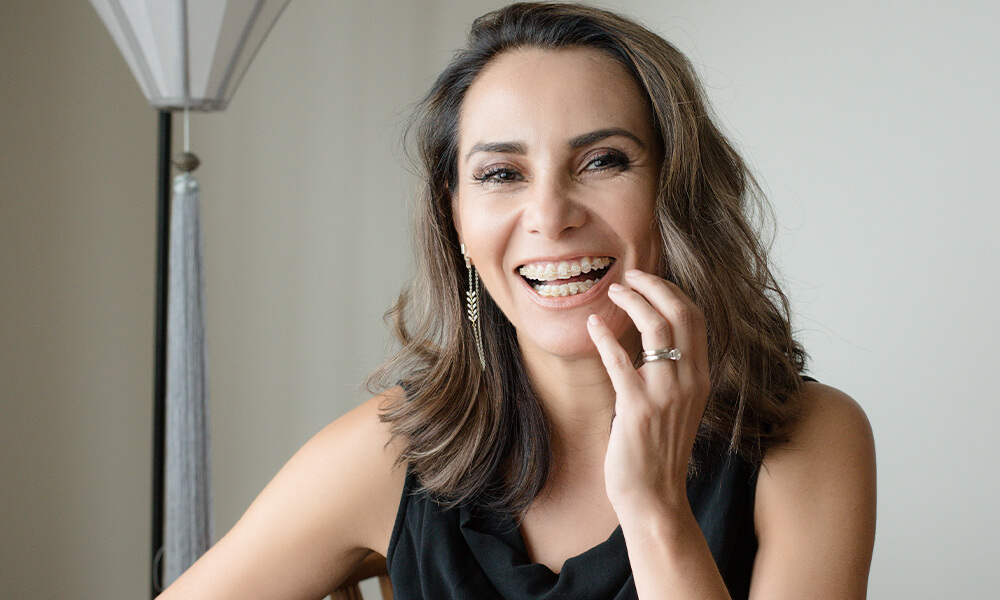
At Braces & Faces Orthodontics, our Specialist Orthodontists use iTero scanning, Invisalign® treatment planning, and Dental Monitoring to make care clear and predictable. We will always recommend the option that suits your bite, goals, and lifestyle.
How they look in real life
Invisalign® uses clear, removable aligners that are barely noticeable in most conversations and photos. Small tooth-coloured attachments are sometimes used to grip the aligners. From arm’s length, most people will not spot them.
Ceramic braces use tooth-coloured or translucent brackets on the front of teeth with a thin wire. They blend well and look neater than metal, but are still visible at close range. For patient-facing jobs and big life events, many adults prefer the near-invisibility of aligners. If you want a fixed option that still looks smart, ceramics are a strong choice.
Day-to-day comfort
Invisalign® aligners are smooth and custom fit, so cheeks and lips usually adapt quickly. You will feel gentle pressure when starting a new set, often easing after a day or two.
Ceramic braces are compact and designed for comfort, but brackets and wires can rub until soft tissues toughen up. Orthodontic wax and warm saltwater rinses help during the first week and after adjustments. Ceramic brackets are strong, though a little more brittle than metal under impact.
Eating, drinking, and social plans
With Invisalign®, you remove aligners to eat and drink anything except water. That means your normal food choices stay on the menu. Plan mealtimes to maintain the usual 20 to 22 hours of wear, and keep a case handy at restaurants and events.
With ceramic braces, you will want to avoid very hard or sticky foods and cut tougher foods into smaller pieces. Sugary or fizzy drinks can increase staining risk around brackets. For busy school or workdays, some patients find the fixed routine simpler because there is nothing to remove, while others prefer the food freedom of aligners.
Oral hygiene and freshness
Invisalign® makes brushing and flossing straightforward, because you remove the aligners to clean. Rinse aligners before reinserting and clean them daily. This can make it easier to keep gums healthy during treatment.
Ceramic braces need more careful brushing around brackets and under the wire. Interdental brushes are essential after meals. Our team will coach your routine and provide practical tips so cleaning stays efficient.
Speech and first-week adjustment
Most Invisalign® patients notice only a slight lisp for a day or two when they start or change aligners, which usually settles quickly. Ceramic braces can affect lip posture for a short time, but speech typically normalises after the initial adjustment.
Treatment control and suitability for complex bites
Both systems can deliver excellent results when planned and supervised by a Specialist Orthodontist. Ceramic fixed appliances give continuous control and can be ideal for complex tooth movements and bite corrections that need precise mechanics, auxiliaries, or elastics worn in specific patterns. If you have significant rotations, root uprighting needs, impacted teeth, or complex bite changes, fixed braces may be recommended.
Invisalign® now treats a wide range of cases, including many bite issues, crowding, spacing, and crossbites. Success relies on consistent wear. Our Platinum Elite Invisalign® status reflects high experience with planning and finishing aligner cases, which supports predictability. For some advanced bite corrections, we may still suggest ceramic or a hybrid plan that uses short fixed phases.
Fewer visits with Dental Monitoring
For Invisalign®, we pair your treatment with Dental Monitoring, a secure app that guides weekly photos or scans at home. The app organises your images and flags trends for our clinicians to review. When progress is on track, we can safely space out in-person appointments, which helps during exams, busy work periods, or travel. If something needs attention, we bring you in promptly. Clinical decisions are always made by a Specialist Orthodontist.
Digital planning with iTero
Your journey starts with an iTero 3D scan. We use it to map tooth movement, plan attachments, and preview potential outcomes. For fixed braces, iTero helps with records, digital models, and efficient appliance planning. Digital workflows improve accuracy and comfort compared with traditional impressions.
Day-to-day: which feels easier?
If you value near-invisibility, food freedom, and simpler brushing, Invisalign® often fits best, provided you can commit to wear time.
If you prefer a set-and-forget appliance with precise control always on the teeth, ceramic braces are a dependable, aesthetic fixed choice.
Motivation and routine matter. Teenagers who can manage wear time usually enjoy the flexibility of aligners at school, sports, and photos. Adults often weigh visibility and meeting schedules against the simplicity of a fixed brace. We will help you test both options at your assessment.
What happens at a free Invisalign® consultation?
You meet a clinician trained in aligner planning. We take an iTero scan and photos, discuss goals, check suitability, outline a treatment plan and timeline, and explain fees and payment options. You can see a smile simulation and learn how Dental Monitoring supports your progress. There is no obligation, and questions are welcome.
If you prefer a specialist brace assessment, our orthodontists will examine your bite, discuss ceramic and other fixed options, and map out a tailored plan.
Quick FAQ
How do Invisalign® and ceramic braces compare day to day?
Invisalign® is almost invisible, removable for meals, and easier for brushing. Ceramic braces are discreet, fixed, and great for precise control, but need food care and more detailed cleaning.
Which suits complex bite corrections?
Complex movements and certain bite changes are often best with fixed braces. Many cases are aligner-suitable too, and we sometimes use a hybrid plan.
How does Dental Monitoring reduce visits for Invisalign®?
You send weekly scans from home, we review progress remotely, and we schedule in-person visits only when needed.
What happens at a free Invisalign® consultation?
iTero scan and photos, suitability check, personalised plan, timeline, costs, and Q&A, with no obligation.
Why choose Braces & Faces Orthodontics
- Specialist Orthodontists with experience in adult and teen care.
- Invisalign® Platinum Elite provider status for depth of aligner expertise.
- iTero digital scans for accurate planning and comfortable records.
- Dental Monitoring for convenient, clinician-led remote checks.
- Warm, patient-first care from a friendly Wolverhampton team.
If you want a deeper dive into aligners locally, explore our Invisalign® information and see how we support treatment from first scan to retainers. You can read more on our Invisalign® page and book when ready.
Next steps
Book a free Invisalign® consultation to preview your smile with iTero and discuss a personalised plan.
Prefer fixed braces? Ask for a specialist brace assessment to review ceramic and other options.
Contact us by phone on 01902 341991, email info@bracesfaces.co.uk, or use our website booking page. We are here to help you choose the treatment that suits your bite, schedule, and lifestyle.


 Opening hours
 Open in Google Maps